
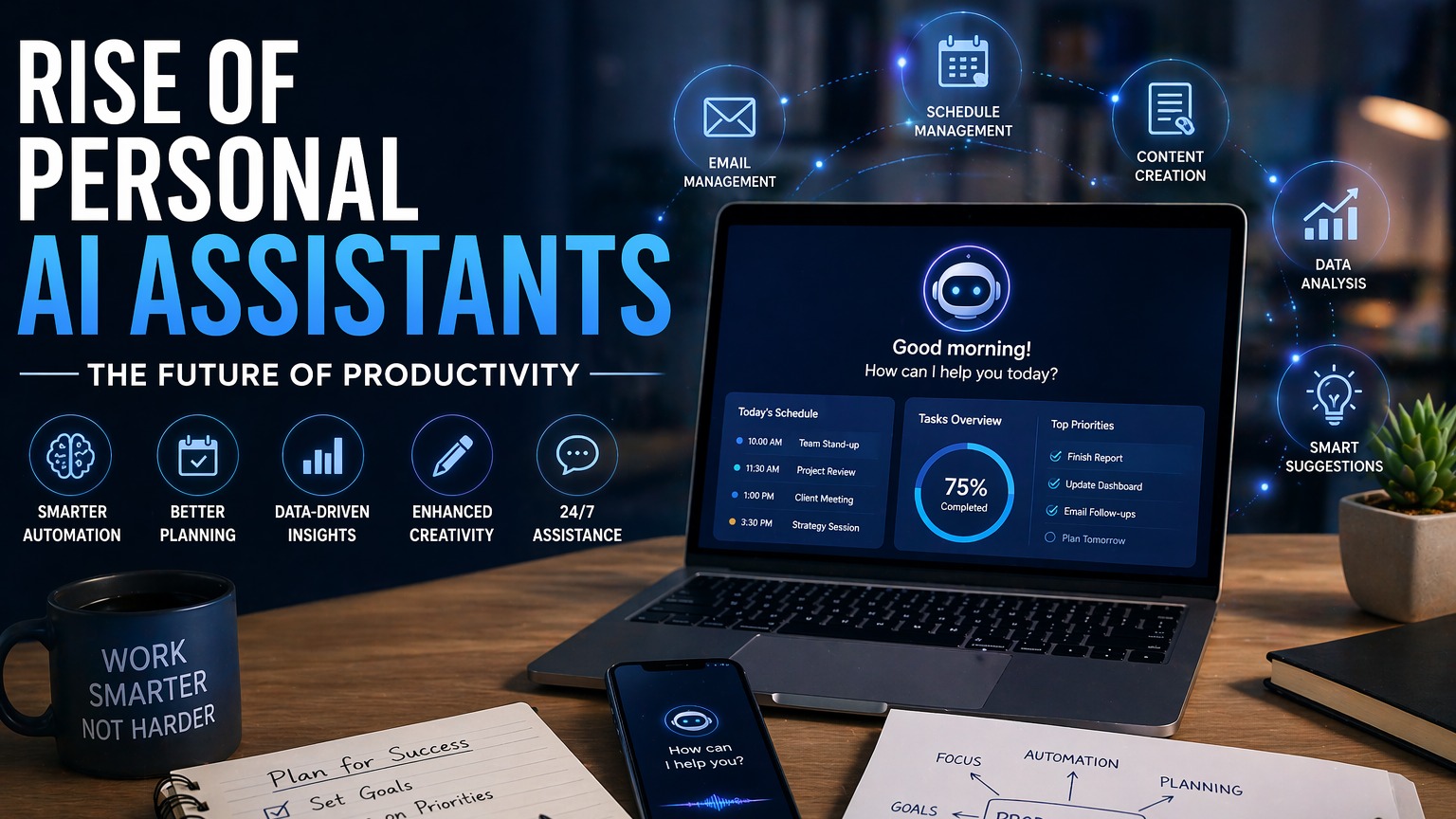
Rise of Personal AI Assistants: The Future of Productivity
Productivity is no longer just about working harder—it’s about working smarter. And right now, the biggest shift happening in how we work is the rise of personal AI assistants.
From managing schedules to generating content, AI assistants are quickly becoming digital partners rather than just tools. If you’re not paying attention to this trend, you’re going to fall behind—fast.
What Are Personal AI Assistants?
Personal AI assistants are software systems powered by artificial intelligence that help individuals perform tasks, make decisions, and automate workflows.
Unlike traditional tools, they:
- Learn from your behavior
- Adapt to your preferences
- Improve over time
Think of them as a combination of a secretary, analyst, and creative partner—all in one.
Why They’re Growing So Fast
There are three main reasons behind their rapid rise:
1. Explosion of Data
We generate massive amounts of data daily. AI assistants help filter, organize, and extract value from it.
2. Demand for Efficiency
People want to do more in less time. AI removes repetitive tasks and frees up mental energy.
3. Advances in AI Technology
Modern AI can now understand language, context, and intent—making assistants far more useful than before.
How AI Assistants Are Changing Productivity
1. Automating Repetitive Tasks
Tasks like:
- Email drafting
- Data entry
- Scheduling
can now be handled instantly. This reduces time spent on low-value work.
2. Enhancing Decision-Making
AI can:
- Analyze large datasets
- Identify patterns
- Suggest actions
Instead of guessing, you’re making data-backed decisions.
3. Boosting Creativity
AI helps generate:
- Blog posts
- Ideas
- Designs
It doesn’t replace creativity—it accelerates it.
4. Smarter Time Management
AI assistants can:
- Prioritize tasks
- Set reminders
- Optimize schedules
You spend less time planning and more time executing.
Real-World Use Cases
Here’s how people are actually using AI assistants today:
- Students: Research, note-taking, and study planning
- Professionals: Writing reports, analyzing data, managing workflows
- Entrepreneurs: Content creation, customer support, marketing automation
The common theme? Less manual work, more strategic thinking.
Challenges You Shouldn’t Ignore
Let’s be real—this isn’t perfect.
Over-Reliance
Relying too much on AI can weaken critical thinking skills.
Accuracy Issues
AI isn’t always right. You still need to verify outputs.
Privacy Concerns
Sensitive data must be handled carefully.
If you blindly trust AI, you’re setting yourself up for mistakes.
How to Use AI Assistants Effectively
Here’s the difference between people who benefit from AI and those who don’t:
Be Clear with Instructions
Vague input = poor output. Be specific.
Use AI as a helping hand , Not a Replacement
You’re still responsible for final decisions.
Validate Results
Always double-check important information.
Keep Learning
AI evolves fast. Stay updated or get left behind.
The Future of Personal AI Assistants
We’re just getting started.
In the near future, AI assistants will:
- Understand you on a deeper level
- Anticipate your needs
- Act proactively without constant input
They won’t just assist—they’ll collaborate.
Final Thoughts
The rise of personal AI assistants is not a trend—it’s a shift in how work gets done.
Here’s the reality:
- Those who learn to use AI effectively will multiply their productivity
- Those who ignore it will struggle to keep up
You don’t need to master everything overnight. But you do need to start.
Because in the future of productivity, working alone won’t be enough.